Custom Shorts Manufacturing: A Data-Backed Guide to Gym Shorts, Running Shorts & Seamless Shorts for Your Brand
- Share
- publisher
- AOLAFREE
- Issue Time
- Aug 28,2026
Summary
How custom shorts are made: GSM and fabric specs, waistband construction, seamless vs seamed, compression science, quality checks, MOQ and lead times. Data-backed guide for brands sourcing from China.
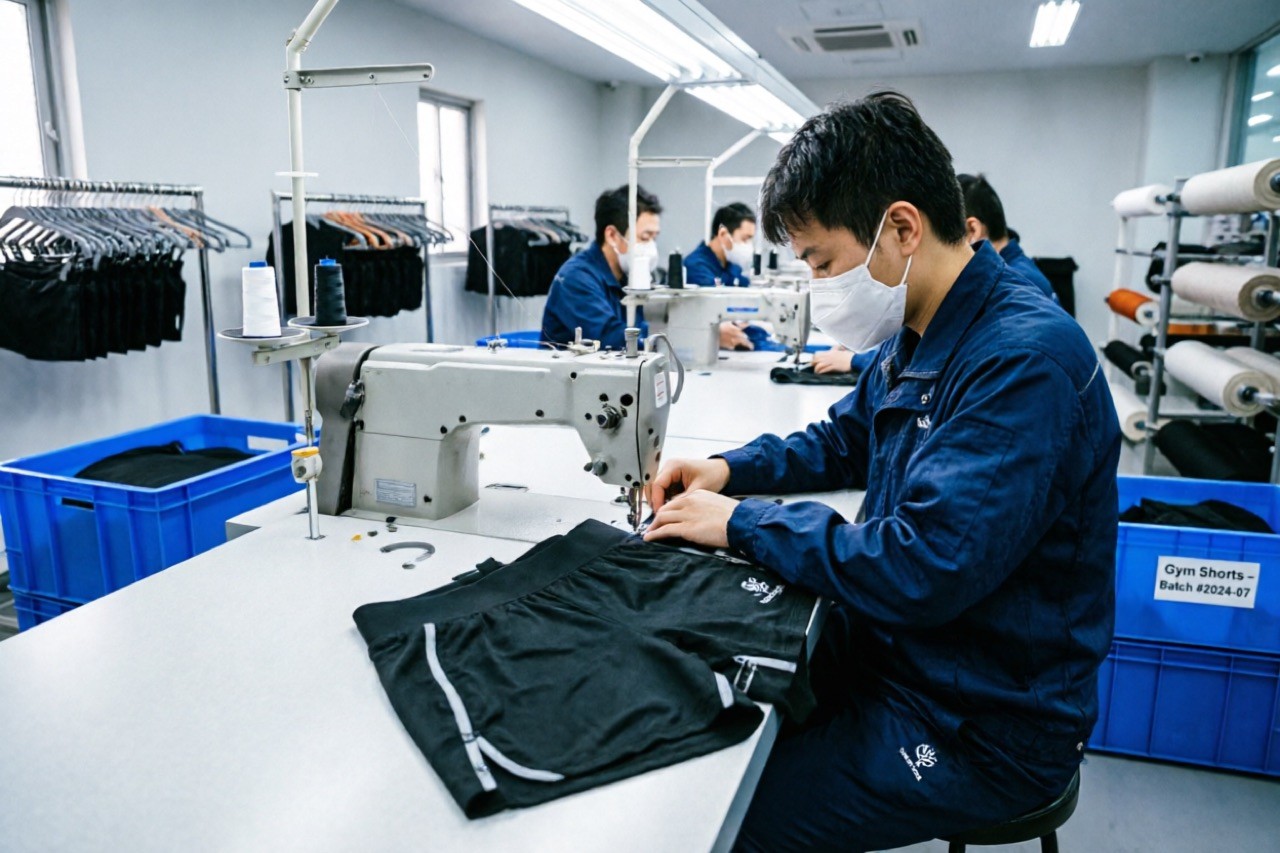
Ask any sportswear buyer what they wish they had known before sourcing their first shorts order, and the answer is almost always the same: shorts look simple, but they are one of the hardest categories to manufacture well.
A basic pair of gym shorts has more variables than most people expect — fabric weight, waistband construction, inseam length, gusset design, hem finish, side-seam versus seamless knitting, and the ratio of nylon, polyester and spandex that determines how the garment moves, dries and holds its shape. Get the balance wrong and your shorts will roll at the waist, ride up mid-workout, go sheer under squat tension, or lose their stretch after a few washes.
The size of the opportunity makes it worth getting right. The global sportswear market is projected to grow from USD 398.61 billion in 2025 to USD 424.80 billion in 2026, reaching USD 593.85 billion by 2031 at a 6.93% CAGR (Mordor Intelligence, Sportswear Market Report 2026). Within that market, running alone accounts for 38.6% of sportswear revenue and is forecast to grow at 8.4% CAGR through 2031 — and running apparel starts with shorts. Add in gym training, yoga, cycling and athleisure, and shorts sit at the center of the fastest-growing segments in the entire category.
This guide explains how custom shorts are actually manufactured — the fabrics, the construction decisions, the quality checkpoints and the sourcing process — using the latest market data and peer-reviewed research, so you can brief your custom shorts manufacturer with confidence instead of guessing.
Part 1: The Market Case — Why Shorts Deserve a Bigger Share of Your Collection
Before discussing fabrics and stitching, it is worth quantifying why shorts deserve investment in your product roadmap.
Running Is the Largest Single Sportswear Segment
According to Mordor Intelligence's 2026 sportswear report, running accounted for 38.6% of global sportswear market revenue in 2025, more than any other sports type, and is forecast to expand at 8.4% CAGR through 2031. For a brand selling running apparel, shorts are the entry product — the item customers buy first, wear most, and rebuy seasonally.
Participation Is at an All-Time High
The Sports & Fitness Industry Association's (SFIA) 2026 Topline Participation Report found that 250 million Americans participated in at least one sport or fitness activity in 2025 — a historic high. Team sports participation surpassed 90 million in the US alone, and mass participation events grew 7.8% year-over-year globally (Eventrac, Mass Participation Report 2025). Every one of those participants needs bottoms; most need multiple pairs.
The Compression Segment Is Growing with the Evidence
Compression shorts are no longer a niche. A 2025 systematic review and meta-analysis of 27 studies published in Life found that compression garments significantly mitigated the decline in muscle strength (Hedges' g = −0.21, p < 0.01) and power (Hedges' g = −0.23, p < 0.01) after exercise-induced fatigue, with the strongest effects in trained individuals (Li et al., 2025). A separate 2023 meta-analysis in Sports Medicine (22 studies) showed sports compression garments improve peripheral blood flow overall (SMD = 0.32, p = 0.001), including venous blood flow (SMD = 0.37). This evidence base gives brands a credible story to tell — and it starts with the shorts.
Market snapshot at a glance:
| Indicator | Value | Source |
|---|---|---|
| Global sportswear market, 2025 | USD 398.61 B | Mordor Intelligence 2026 |
| Global sportswear market, 2031 (forecast) | USD 593.85 B | Mordor Intelligence 2026 |
| Sportswear CAGR, 2026–2031 | 6.93% | Mordor Intelligence 2026 |
| Running share of sportswear revenue, 2025 | 38.6% | Mordor Intelligence 2026 |
| Running segment CAGR, through 2031 | 8.4% | Mordor Intelligence 2026 |
| US participation in sport/fitness, 2025 | 250 M (historic high) | SFIA 2026 Topline Report |
| US team sports participation | > 90 M | SFIA 2026 Topline Report |
Brand takeaway: shorts are a volume category with a data-backed performance story. A well-engineered shorts line gives your brand both scale and credibility — if you build it on the right manufacturing choices.

Part 2: Shorts Anatomy — Every Part That Affects Fit and Performance
A custom shorts order is a collection of decisions. Here is the anatomy of a performance short, part by part.
Fabric Weight (GSM)
GSM (grams per square meter) is the single most important number on a shorts spec sheet.
- 90–140 GSM — lightweight, breathable, fast-drying; ideal for running and hot-weather training. Must be paired with a strong waistband and flatlock seams to avoid transparency under tension.
- 150–200 GSM — the all-rounder zone for gym training and athleisure; enough body to hold shape without feeling heavy.
- 200–260 GSM — heavier brushed or compression fabrics for sculpting, lifting and cooler weather; more opaque and supportive.
Fiber Composition
Most performance shorts are a blend of nylon or polyester with spandex:
- Polyester-dominant (e.g., 80/20 or 85/15 polyester/spandex): quick-drying, colorfast, economical. The default for running and training shorts.
- Nylon-dominant (e.g., 80/20 nylon/spandex): softer hand feel, better abrasion resistance and deeper color depth; the premium choice for yoga shorts and everyday gym wear.
- Recycled versions of both fibers are now standard options for brands with sustainability targets.
Waistband Construction
The waistband is where most fit complaints are born. Options include:
- Elastic waistband with drawstring — classic, adjustable, works across sizes.
- Wide folded waistband (no drawstring) — the modern athleisure look; relies on fabric recovery and a higher spandex ratio.
- Flat-lock stitched vs. overlocked — flatlock seams lie flat against the skin and reduce chafing; essential for running shorts worn on bare legs.
Inseam and Rise
- Short inseam (2.5–4 in / 6–10 cm) — classic running short; maximum freedom, minimum coverage.
- Mid inseam (5–7 in / 12–18 cm) — the current athleisure standard; balances coverage and mobility.
- High-waisted (women's) — typically 9–11 in front rise; the dominant style in yoga and gym shorts, requires precise pattern engineering to avoid gapping at the waist.
Gusset and Crotch
A gusset (a diamond or triangular panel at the crotch) adds mobility and prevents seam stress. High-performance shorts — especially seamless ones — are engineered to move with the body so the crotch seam never bears the full load of a squat or lunge.
Part 3: Fabric Selection — Matching the Shorts to the Workout
Different training contexts demand different fabrics. Here is how a professional sportswear manufacturer matches them.
| Shorts type | Recommended composition | GSM | Key properties |
|---|---|---|---|
| Running shorts (men) | 85/15 polyester/spandex | 110–140 | Quick-dry, lightweight, flatlock seams |
| Running shorts (women, high-waist) | 80/20 nylon/spandex | 150–180 | Soft hand feel, stay-put waistband |
| Gym training shorts | 80/20 polyester/spandex | 160–200 | Durable, opaque under tension |
| Compression shorts | 75/25 nylon/spandex (or higher spandex) | 200–260 | Graduated support, high recovery |
| Yoga shorts | 80/20 nylon/spandex, brushed | 180–220 | Four-way stretch, squat-proof opacity |
| Seamless shorts | Nylon/spandex seamless knit | 180–240 | Zero side seams, body-mapped zones |
These GSM ranges are starting points for product development, not universal specifications. The final fabric weight and composition should be selected according to the intended activity, fabric construction, opacity requirements, stretch recovery, and fit-test results.
The Science of Moisture Management
Sweat management is not marketing — it is measurable. A 2025 study in ACS Applied Materials & Interfaces demonstrated a biomimetic moisture-wicking fabric achieving an accumulative one-way transport capacity of 671% and an overall moisture management capacity of 0.80 (Yu et al., 2025). Another 2024 study in the same journal showed a directional water-transport knitted fabric collected 76.7% of liquid moisture while an ordinary knitted fabric collected just 0.06%, with the ordinary fabric gaining 555.4% more weight when saturated (Wang et al., 2024).
For your brand, this means: when a manufacturer shows you a fabric test report with OMMC (overall moisture management capacity) values, you are looking at real, quantifiable performance — not adjectives.
Part 4: Seamless Shorts — Why Zero Side Seams Matter
Seamless knitting is the fastest-growing construction method in the shorts category, and for good reason: a seamless short is knitted in one piece on a circular knitting machine, eliminating side seams entirely.
What the Research Says
A 2024 study in ACS Applied Materials & Interfaces developed a bioinspired multilayered knitted fabric with directional water transport, confirming that knit structure itself can be engineered for moisture performance (Wang et al., 2024). For shorts, seamless construction means:
- No chafing seams on the outer thigh — a genuine benefit for runners logging long miles.
- Body-mapped zones — different knit densities can be engineered into one garment: denser support at the waistband, more breathable mesh zones at the thighs, higher compression in the glute panel.
- Fewer production steps — less cutting and sewing reduces labor cost and waste, which matters as textile sustainability pressures rise.
The Trade-Off
Seamless is not automatically better. Seamed shorts with a gusset can be more durable and easier to engineer for complex fits like high-waisted women's styles. The right choice depends on your silhouette, budget and target activity — a good OEM shorts manufacturer will be honest about which construction suits your design.
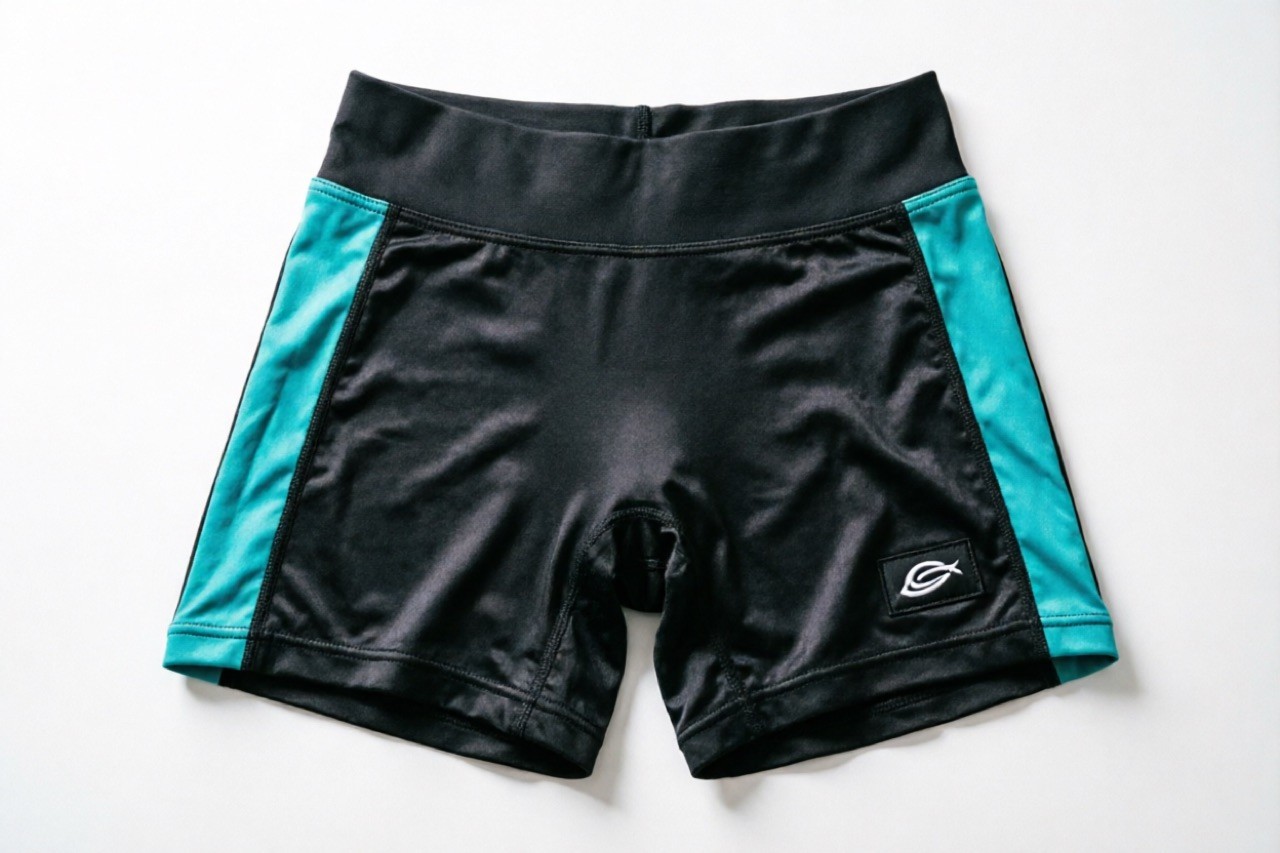
Part 5: The Manufacturing Process — From Brief to Bulk
Here is what actually happens between your design file and the finished shorts on a hanger.
Step 1: Tech Pack and Material Selection
Your manufacturer turns your design into a tech pack: graded measurements, fabric specs, trims, stitch types and construction notes. Fabric is selected against your target GSM, composition and performance requirements — with mill-level test reports for moisture management, colorfastness and shrinkage.
Step 2: Pattern and Sample Development
Pattern makers draft the shorts to your size grading; then a pre-production sample (PPS) is cut and sewn. Expect one to three sampling rounds depending on how many variables change (fit, fabric, trims, branding).
Step 3: Fabric Pre-Treatment and Cutting
Bulk fabric is inspected, relaxed and laid up for cutting — either manually or with automated cutting systems that maximize fabric utilization and minimize waste. Marker efficiency (how tightly pattern pieces nest on the fabric) directly affects your unit cost.
Step 4: Sewing and Construction
Shorts move through the sewing line in stations: waistband, side seams or gusset, hem, then final assembly. Stitch type matters — flatlock for chafe-free inner seams on bare-leg shorts, coverstitch for stretchy hems and waistbands, overlock for interior finishing.
Step 5: Quality Control and Testing
A serious sportswear factory runs QC at multiple checkpoints: incoming fabric, cutting, in-line sewing inspection, and final random inspection (typically AQL 2.5 or tighter). Physical tests cover seam strength, colorfastness to washing and rubbing, shrinkage after 3–5 washes, and — for compression styles — recovery after repeated stretch cycles.
Step 6: Finishing, Packing and Shipping
Garments are trimmed, ironed, inspected one final time, poly-bagged and cartoned with your labels, hang tags and barcode stickers. Then it ships — sea freight for bulk, air freight for urgent launches.
Want to see the full process in detail? Our OEM/ODM production guide walks through every stage with real factory examples.
Part 6: Key Quality Checks — How to Judge a Shorts Sample
When your sample arrives, run it through these checks before approving:
- Stretch test — stretch the fabric widthwise and lengthwise; it should recover fully. Poor recovery means bagging knees and rolling waistbands.
- Squat test (women's styles) — put the short on and squat; check opacity under tension and whether the waistband stays put.
- Waistband roll test — fold the waistband over and release; a quality waistband springs back flat.
- Seam inspection — check the inside of seams for loose threads and rough edges that will chafe on bare legs.
- Wash test — wash 3 times; check for shrinkage, color bleed and pilling.
- Drawcord check — if there is a drawstring, ensure it is anchored (not sewn through) so it cannot be pulled out.
Part 7: Branding and Customization Options
Shorts are a branding canvas — and the options are broader than most buyers realize:
- Labels: woven labels, printed labels, silicone heat-transfer labels (popular for seamless wear).
- Printing: screen printing, heat transfer, sublimation (ideal for all-over printed running shorts).
- Embroidery: logo embroidery on the waistband or leg — premium, durable.
- Reflective details: 360° reflective trims for runners — a genuine safety feature that sells.
- Packaging: custom poly bags, hang tags and inserts that make unboxing feel intentional.
If you are building a private label line, these details are where your brand identity lives. See our women's activewear manufacturer hub for how customization programs are structured, or explore custom women's shorts and custom men's shorts collections directly.
Part 8: Sustainability — Recycled Fibers and What the Data Shows
Sustainability is no longer optional in sportswear sourcing — and the data is finally catching up with the marketing.
The Biodegradation Reality Check
A 2026 study in Biodegradation buried virgin and recycled cotton and PET fabrics in soil for 1, 4 and 7 months. The findings: 100% cotton and cotton/recycled-cotton fabrics degraded 93–95% within one month and completely within four months, while 100% PET and 100% r-PET fabrics showed no degradation after 7 months (Erayman Yüksel & Korkmaz, 2026). In other words, recycled polyester is not biodegradable — but it still delivers the environmental benefit of diverting waste from landfill and reducing virgin resource extraction.
What This Means for Shorts Sourcing
- Recycled nylon (e.g., ECONYL-style) and recycled polyester (rPET) are now commodity options at most serious factories — ask for the recycling certificate and fiber traceability.
- Blending recycled fibers with virgin spandex is standard; spandex itself is rarely recycled at scale yet, so disclose the true composition honestly.
- Dyeing and finishing often carry a bigger environmental footprint than the fiber itself — look for factories with water-recycling and low-impact dye programs.
A good custom shorts supplier will show you its sustainability certifications and give you transparent composition options — recycled, blends, or fully virgin — without greenwashing.
Part 9: MOQ, Pricing and Lead Times — What to Expect
Every brand asks the same three questions. Here are honest, market-realistic answers.
MOQ (Minimum Order Quantity)
- Standard custom shorts: MOQs typically start at 300–500 pieces per color per style at most Chinese factories.
- Flexible MOQ programs: some custom shorts factories — offer flexible programs for startups, sometimes starting at 100–200 pieces per style, especially for stock fabric with existing patterns.For Aolafree,our MOQ is 300pcs per style(supports mixed 2 colors)
- Seamless shorts: generally higher MOQs (500–1,000+) because seamless machines are expensive and changeover is time-consuming.
Pricing Factors
Unit price is driven by: fabric weight and composition, construction (seamed vs seamless), trims and branding, order volume, and finishing complexity. Compression and seamless styles sit at the premium end of the range.
Lead Times
- Sampling: 7–15 days per round.
- Bulk production: 30–50 days depending on fabric availability (custom-dyed fabric adds 2–3 weeks for the dyeing run).
- Shipping: 2–4 weeks sea freight from China to Europe/US; 3–7 days air freight for urgent reorders.
For detailed thresholds, check our price and MOQ page and sample policy — both are written to be read before you send your first inquiry, not after.
Part 10: Common Shorts Manufacturing Mistakes (and How to Avoid Them)
- Specifying the wrong GSM for the activity. A 220 GSM "running short" will feel like a sweatpant; a 100 GSM gym short will go sheer in the squat rack. Match GSM to activity, not to mood.
- Skipping the gusset on high-mobility styles. Seamed shorts without a gusset fail at the crotch seam under repeated load.
- Ignoring waistband recovery. If the waistband fabric and the body fabric have different recovery rates, the waistband will roll. Test it before bulk.
- Choosing print methods that crack. Screen print on high-stretch shorts cracks and fades; sublimation or silicone transfers are the durable choices for performance wear.
- Forgetting seam placement. A seam running down the outer thigh chafes on long runs. Flatlock or seamless construction solves it.
- Ordering "one size for everyone." Grading matters — a shorts brand that ignores true size grading returns customers. Read our fit and sizing guide for the data on why fit drives returns.
Part 11: Shorts vs. Related Bottoms — Where Shorts Fit in Your Range
Shorts are one piece of a bottoms strategy. Here is how they relate to the categories around them:
| Category | Best for | Typical fabric | Notes |
|---|---|---|---|
| Shorts (5–7 in) | Training, athleisure | Nylon/poly spandex 150–200 GSM | The volume product |
| Running shorts (short inseam) | Running, hot weather | Poly spandex 110–140 GSM | Flatlock, quick-dry |
| Compression shorts | Recovery, lifting | Nylon spandex 200–260 GSM | Support + blood-flow story |
| Yoga shorts | Yoga, pilates | Brushed nylon spandex 180–220 GSM | High-waist, squat-proof |
| Leggings | Full coverage | Nylon spandex 200–260 GSM | See the custom leggings guide |
Part 12: How to Brief Your Shorts Manufacturer (Checklist)
When you approach a factory, come with a brief they can actually build from:
- Target activity and user profile
- Desired silhouette and inseam (with reference images)
- Fabric requirements: composition, GSM, hand feel, recycled preference
- Sizing range and grading
- Branding: labels, prints, trims, packaging
- Target price point and MOQ
- Timeline and destination market (for compliance requirements)
Not sure where to start? Our gym wear sourcing guide covers how to vet and brief manufacturers step by step, and our activewear fabric guide explains the fabric science behind the choices above.
Ready to Build Your Shorts Line?
The shorts category is one of the highest-volume, fastest-repeating segments in sportswear — and with running growing at 8.4% CAGR and compression science now backed by peer-reviewed meta-analyses, there has never been a better time to launch or upgrade a shorts collection. The difference between a shorts line that sells and one that gathers dust is decided before production starts: fabric weight matched to activity, honest stretch and recovery specs, correct construction, and a manufacturer who tells you the truth about seams, GSM and MOQ instead of just taking the order.
That is exactly how we work at AOLAFREE. Meet the team and factory behind the shorts on our About Us page, or see how we run production at our factory strength overview. As a women's activewear manufacturer and custom sportswear factory with dedicated men's shorts and women's shorts programs, we engineer every short around real movement — running, lifting, yoga, daily wear — and back it with mill-level fabric testing, AQL quality control and flexible MOQs for growing brands.
Tell us about your shorts project — target activity, sizes, target price and timeline — and we will recommend fabric compositions, GSM ranges and construction options that fit your budget, then send samples for your team to test. Request a quote and see our MOQ options, read our sample policy to see how sampling works before you commit, or contact us directly — our team typically responds within one business day.