From Forward Fold to Teaser: The Fabric and Fit Science Behind Practice Wear
- Share
- publisher
- AOLAFREE
- Issue Time
- Aug 25,2026
Summary
The science of stretch, coverage, seams, and compression in yoga and Pilates practice wear — and how a sportswear fabric manufacturer turns movement analysis into high-performance apparel.

If you are an activewear brand developing yoga and Pilates apparel, this article walks you through the core engineering logic for stretch, coverage, seams and compression. AOLAFREE, a professional activewear manufacturer and supplier in China, shares practical evaluation standards to help your product team define specs, validate samples and avoid common development pitfalls. Four-way stretch is important for yoga and Pilates apparel, allowing garments to move with the body during forward folds, hip openers, spinal articulation, and extended holds. However, stretch alone does not determine performance. Fabric recovery, opacity under tension, surface durability, and hand feel also influence how a garment performs over time. Explore our fabric options to review material choices for your activewear line. For activewear brands, nylon-spandex blends are often considered for their smooth hand feel and close-to-body fit, while polyester-spandex blends may suit products where color retention, abrasion resistance, and cost are important considerations. Actual performance depends on the yarn, knit construction, blend ratio, and finishing process. During development, compare fabric samples against the intended product requirements and verify stretch recovery, opacity, pilling resistance, and dimensional stability before approving bulk production. Coverage depends on more than fabric weight. Knit construction, yarn characteristics, color, fabric stretch, and garment fit all affect opacity during movement. Brands should evaluate fabric samples at the intended garment size and test finished leggings under representative stretching and bending conditions. GSM should be selected according to the product's desired drape, compression, coverage, and intended use rather than treated as a universal squat-proof threshold. Opacity should be confirmed during sample development rather than assumed from fabric weight or composition alone. AOLAFREE helps brands evaluate fabric coverage under relevant stretch conditions before approving a design for bulk production. Seam and structural design distinguish performance activewear from ordinary fashion apparel. Flatlock seams, gusset construction, bonded edges and targeted compression can serve different purposes depending on the garment design. The right combination depends on fabric properties, seam strength, skin comfort, fit requirements and the intended level of support. The right combination depends on fabric properties, seam strength, skin comfort, fit requirements and the intended level of support. Below is the practical evaluation framework your product team can use: AOLAFREE, China activewear supplier, does not default to one single construction. We select seams, panels and compression schemes based on your product positioning, design brief and feedback from action-fit samples. We turn your apparel concept into sellable studio-ready activewear through a clear, repeatable workflow. Learn about our OEM & ODM service for yoga and Pilates collections: Our factory team supports the full workflow. View our factory strength to understand our production quality control system.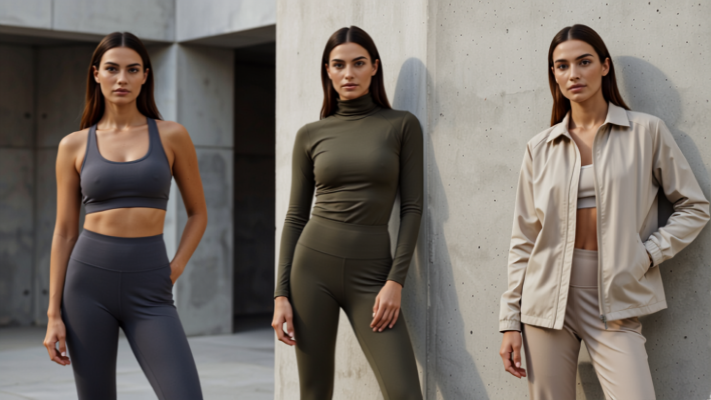
Stretch, Recovery and Fabric Selection
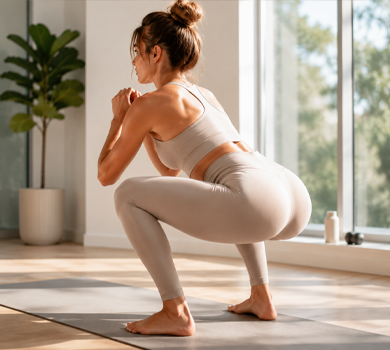
Coverage & Opacity Evaluation Standard
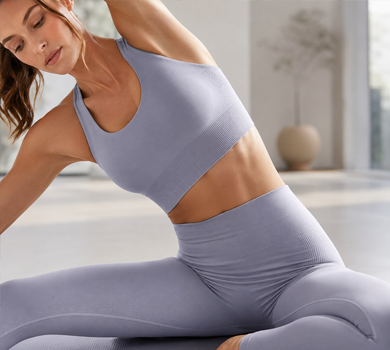
Seam, Structure & Compression Evaluation
From Movement Analysis to Bulk Production