How to Find Reliable Sportswear Manufacturers in China: 10 Expert Tips for 2026
- Share
- publisher
- AOLAFREE Team
- Issue Time
- Jul 5,2026
Summary
A practical guide to finding and vetting sportswear manufacturers in China. Covers trade platforms, factory audits, red flags, verification checklists, negotiation strategies, and building long-term partnerships.

For activewear and sportswear brands — from startups launching their first collection to established labels expanding production — finding a reliable manufacturer in China is often the single most critical business decision. A good manufacturing partner can become the engine of your brand's growth. A bad one can drain your budget, destroy your timeline, and damage your reputation with customers. The challenge is not that there are too few options — China's textile and apparel manufacturing ecosystem is the largest and most sophisticated in the world. The challenge is separating the truly capable, ethical, and reliable factories from the thousands of trading companies, middlemen, and underperforming workshops that market themselves as manufacturers. Having spent over a decade in activewear manufacturing in Shenzhen — the heart of China's sportswear industry — I have developed a systematic approach to finding and vetting manufacturing partners. This guide shares the 10 expert tips I use to help brands avoid costly mistakes and build successful, long-term production relationships. Key Takeaway Finding a reliable sportswear manufacturer in China requires a systematic approach: verify certifications, visit the factory, test with a small order, and build relationships based on clear communication rather than just price comparison. China's textile manufacturing is not a monolith — different regions specialize in different types of production. Understanding this geography is your first strategic advantage: The epicenter of high-quality activewear. Home to advanced seamless knitting (Santoni), performance fabric innovation, fast sampling, and flexible MOQs. Best for mid-to-premium sportswear brands. China's sportswear capital. Specializes in footwear, sports jerseys, and large-scale athletic apparel. Strong supply chain integration. Home to Anta, Xtep, and their supplier networks. Known for knitwear, base layers, and casual sportswear. Strong in synthetic fabric production and dyeing. Good for brands blending fashion and function. Specializes in functional textiles and outdoor sportswear. Advanced fabric mills producing waterproof, breathable, and thermal performance materials. Alibaba is the most visible platform for finding Chinese manufacturers, but relying on it exclusively limits your options and increases the risk of encountering trading companies posing as factories. A multi-channel sourcing strategy yields better results: Certifications are a fast way to gauge a factory's commitment to quality and compliance. However, many factories claim certifications they do not actually hold. Here is what to look for and how to verify: Red Flag: If a factory cannot provide a certificate number or verification method for any claimed certification, assume it is not valid. Legitimate factories are proud of their certifications and will share documentation readily. There is no substitute for seeing a factory's actual production environment. While an in-person visit is ideal (and I highly recommend it for large orders), a structured video audit can be effective for initial screening: One of the most common mistakes brands make is partnering with a trading company believing it is a factory. While trading companies can provide value (sourcing across multiple factories, handling logistics), they add a markup and create a communication layer between you and the actual producer. Here is how to tell the difference: Never commit to a large production volume — no matter how impressive the samples look or how persuasive the sales representative is — without first completing a small test order. Here is a structured approach: Many manufacturing relationships fail not because of technical issues, but because of communication breakdowns. Here is how to communicate effectively with Chinese manufacturers: In activewear manufacturing, the factory's equipment and technology directly determine product quality, consistency, and the types of garments they can produce. Key equipment to look for: Essential for seamless leggings, bras, and base layers. Indicates a factory invested in high-end activewear production capability. Creates the flat, chafe-free seams essential for performance activewear. A factory without these cannot produce premium sportswear. Gerber or similar automated cutting tables improve precision, reduce fabric waste, and maintain consistency across large production runs. For custom-printed activewear, in-house digital or sublimation printing capability reduces lead time and improves quality control compared to outsourcing. The lowest unit price rarely delivers the best total value. Smart negotiation considers these factors alongside price: The most successful brand-manufacturer relationships are partnerships, not vendor transactions. Here is how to build that partnership: Learn from the mistakes others have made. Here are the most common pitfalls and how to avoid them: Finding a reliable sportswear manufacturer in China is not a one-time task — it is a strategic capability that compounds in value over time. A great manufacturing partner does more than produce garments; they contribute to your design process, help you navigate material innovation, provide market intelligence, and become a true extension of your brand team. The 10 tips in this guide — from understanding manufacturing geography to building partnership relationships — represent the approach I have developed over years of activewear manufacturing experience. Brands that follow this systematic approach consistently find better partners, produce higher-quality products, and build more sustainable businesses than those who chase the lowest price on Alibaba. Looking for a reliable activewear manufacturing partner in China? Contact the AOLAFREE team to discuss your project requirements.Introduction: The Challenge of Finding the Right Manufacturing Partner
Tip 1: Understand China's Sportswear Manufacturing Geography
Guangdong (Shenzhen, Guangzhou, Dongguan)
Fujian (Quanzhou, Jinjiang, Xiamen)
Zhejiang (Hangzhou, Ningbo, Shaoxing)
Jiangsu (Suzhou, Wuxi, Changzhou)
Tip 2: Use Multiple Sourcing Channels — Not Just Alibaba
Tip 3: Verify Certifications — Don't Just Take Their Word for It
Certification
What It Certifies
How to Verify
ISO 9001 Quality management system Check issuing body (SGS, TUV, Bureau Veritas), request certificate number, verify on certification body website OEKO-TEX Standard 100 Textile safety — no harmful substances Verify label number on oeko-tex.com official database GRS (Global Recycled Standard) Recycled content and responsible production Check Textile Exchange directory, verify scope certificate number BSCI / SMETA / WRAP Social compliance, ethical labor Request audit report, check with issuing organization Tip 4: Conduct a Factory Audit — Video or In-Person
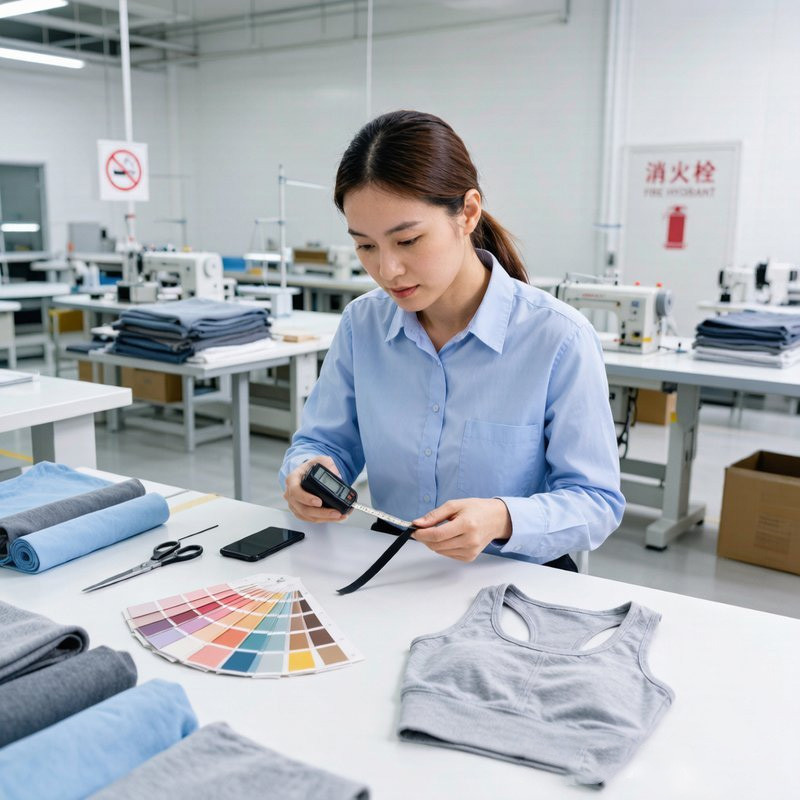
What to Look for During a Factory Audit
Tip 5: Distinguish Factories from Trading Companies
Indicator
Real Factory
Trading Company
Product Range Specialized — focused on specific categories (e.g., seamless activewear, knitwear) Broad — sells everything from socks to jackets to bags Factory Visit Welcomes visits, provides factory address readily Hesitates, makes excuses, or shows a different facility Technical Knowledge Deep — can discuss GSM, stitch types, fabric construction in detail Surface-level — may need to check with "the factory" for technical questions Business License Scope includes "manufacturing" or "production" Scope is "trading" or "import/export" Sampling Capability Can produce custom samples based on your designs Only shows existing samples; slow to produce custom work Tip 6: Test with a Small Order First
The Test Order Framework
Tip 7: Master Communication — The Foundation of Successful Manufacturing
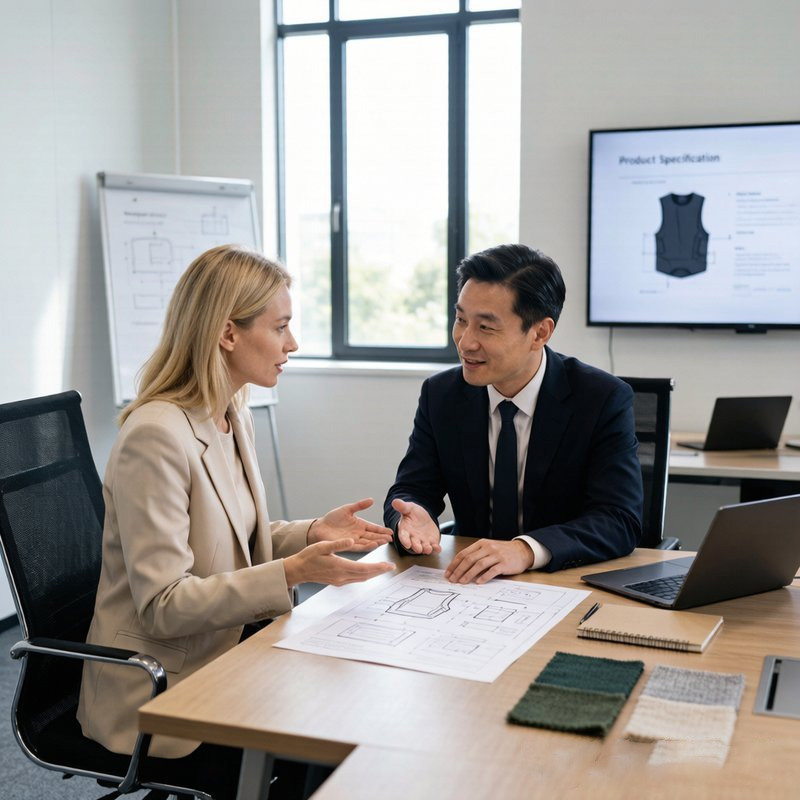
Essential Communication Practices
Tip 8: Evaluate Technology and Equipment — Not Just Price
Santoni Seamless Machines
Four-Needle Flatlock Machines
Automated Cutting Systems
Digital/Sublimation Printing
Tip 9: Negotiate Smart — Focus on Total Value, Not Just Unit Price
What to Negotiate Beyond Price
Tip 10: Build a Relationship, Not Just a Transaction
Common Pitfalls to Avoid When Sourcing from China
Conclusion: Your Manufacturing Partner Is Your Competitive Advantage