Sample Quality vs Bulk Production Quality
- Share
- publisher
- qiu
- Issue Time
- Oct 30,2026
Summary
Sample quality does not guarantee consistent bulk production. This guide covers five common activewear quality gaps: fabric consistency, color variation, stitching, sizing and finishing. See how tech pack confirmation, pre-production sample approval and QC lower risks. AOLAFREE helps activewear brands achieve reliable sample-to-bulk consistency via professional OEM & ODM services.
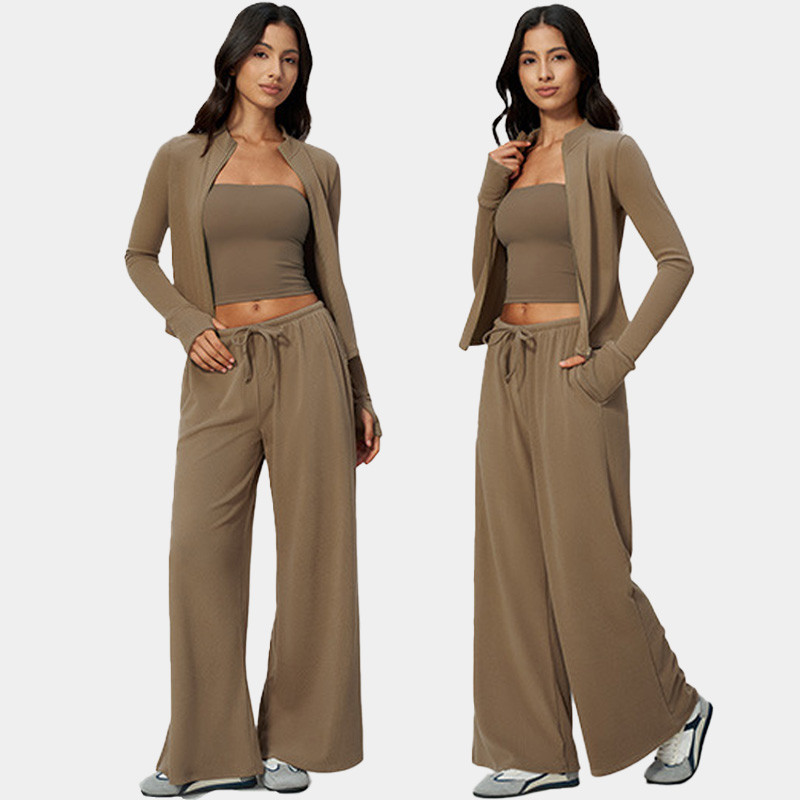
For activewear brand founders, product development managers and sourcing buyers, one of the most frustrating manufacturing risks is this: your approved sample looks, feels and fits perfectly — but bulk goods arrive with inconsistent fabric, off-colour batches, uneven stitching or unpredictable sizing. If you have worked with apparel suppliers before, you may have faced this pain point.
At AOLAFREE, a reliable China activewear manufacturer and supplier, we understand that a beautiful sample is only the starting line. The real test lies in stable, repeatable bulk production that matches your signed-off standard every single run. View our sample approval policy to learn how we lock specifications before cutting bulk orders.
1. Introduction — Why Sample Quality Doesn't Always Guarantee Bulk Production Quality
Sampling and bulk production operate under very different conditions. A sample is usually made in small quantities, with careful hand adjustment and selected trial fabric. Bulk production relies on large fabric rolls, continuous cutting, assembly line sewing and fixed mass-production workflows. Many inconsistency issues appear because the sample material and bulk fabric come from different dye lots, or verbal design notes are not converted into formal, auditable manufacturing standards.
An approved sample defines the product standard, but consistent bulk production depends on how well that standard is documented, controlled and inspected throughout manufacturing.
Without clear written specs, in-process checks and final verification, even an experienced factory can drift away from the sample. This article breaks down common sample-to-bulk gaps and the structured quality control system AOLAFREE uses to protect your activewear brand.
2. Sample Production vs Bulk Production: What Are the Key Differences?
Sampling focuses on proving design, fit and fabric performance. Bulk manufacturing focuses on replicating that proven design across hundreds or thousands of units reliably. Below is a clear comparison table for your sourcing reference:
| Dimension | Sample Production | Bulk Production |
|---|---|---|
| Production Volume | Small trial runs, 1–5 pieces typically | Large continuous order quantity |
| Fabric Source | Trial fabric swatches or small rolls | Bulk fabric purchased by full rolls / batches |
| Pattern & Fit | Pattern revisions and repeated fitting adjustments | Locked graded pattern according to approved tech pack |
| Construction & Sewing | Flexible hand adjustment for each piece | Fixed standard operation procedure for all operators |
| Sizing Coverage | Mainly validating base size | Full size range with graded measurement tolerances |
| QC Mode | 100% individual manual check | Batch sampling + in-line process inspection |
| Color Management | Single lab dip / sample colour confirmation | Cross-roll shade checking and light source verification |
3. 5 Common Quality Differences Between Samples and Bulk Production
These are the most frequent consistency issues our clients report, paired with our control framework at AOLAFREE activewear factory.
3.1 Fabric Consistency
Common issue: Bulk fabric feels firmer or softer than the sample. Fabric GSM, thickness, stretch and recovery vary between rolls. Some batches show different shrinkage or pilling behaviour after washing.
Root cause: Different dye lots, inconsistent yarn blending, unstable knitting parameters or skipped pre-production fabric lab testing.
AOLAFREE control: We lock fabric composition, GSM, knit structure and performance requirements before bulk fabric order. All incoming bulk fabric is cross-checked against the approved swatch card. Stretch, recovery, shrinkage and colour fastness are verified before cutting. Explore our activewear fabric options.
3.2 Color Consistency
Common issue: Finished bulk garments appear lighter, darker or warmer/cooler than the approved sample. Shade variation exists between different fabric rolls inside one order; deep colours such as black and navy are especially sensitive.
Root cause: Dye lot deviation, inconsistent dyeing temperature, or colour matching done under uncontrolled lighting.
AOLAFREE control: We keep the official lab dip as the master colour standard. Every fabric roll is shade-checked against the master under standard light booth conditions. If shade bands exceed acceptable tolerance, rolls are separated or rejected before production starts.
3.3 Stitching and Construction
Common issue: Uneven stitch tension, skipped stitches, seam offset, unstable elastic waistbands, inconsistent crotch or shoulder strap construction.
Root cause: Operator training gaps, uncalibrated sewing machines, missing standard construction sheets for high-stress zones.
AOLAFREE control: We document stitch density, thread type, seam allowance and reinforcement rules for all critical areas including waistband, crotch, shoulder straps and binding. Line supervisors perform hourly in-line spot checks on construction quality.
3.4 Fit and Size Consistency
Common issue: Same-size leggings or sports bras have different waist circumference, inseam, rise or strap length. Graded sizes do not follow the agreed size spec.
Root cause: Unclear measurement points, loose tolerance rules, pattern grading errors or cutting distortion.
AOLAFREE control: We build a formal size spec sheet with defined measurement points and clear plus/minus tolerance. Sampling measurements are recorded, and bulk pieces are randomly pulled from each size run for measurement verification. Learn more about custom leggings fit development.
3.5 Finishing and Packaging
Common issue: Loose threads, stains, press marks, misplaced heat transfer prints or silicone logos. Hang tags, size labels and polybag packing do not match brand requirements.
Root cause: Weak final finishing station, missing print registration marks, unclear packaging SOP.
AOLAFREE control: Print and label placement templates are confirmed at sampling stage. Finishing workers trim threads and inspect surface defects piece by piece. The packing team cross-checks SKU, label set and packaging style against your order sheet before carton sealing.
4. How to Ensure Bulk Production Matches the Approved Sample
Consistency is not guaranteed by one sample alone. It comes from a five-stage locked workflow that translates sample approval into enforceable production rules:
- Sample Approval: Final sign-off on fit, fabric, colour, print, labels and construction details.
- Specification Confirmation: Freeze the tech pack, size chart, colour standard and construction brief.
- Material Inspection: Incoming fabric, elastic, thread and trims are inspected before release to cutting.
- In-Process Quality Control: QC checks at cutting, printing, sewing and mid-production stages.
- Final Inspection: Full check covering dimensions, appearance, stitching, branding, labels and packaging.
Our core principle is simple: the approved sample is the reference, but the written specification package is the rulebook that every production team must follow. See our bulk production scheduling workflow.
5. What Should Activewear Brands Confirm Before Bulk Production?
Both your brand and your manufacturer share responsibility for stable bulk output. Use this checklist before releasing bulk PO:
- ✅ Final signed approved sample
- ✅ Fabric composition and GSM specification
- ✅ Master colour standard and shade tolerance
- ✅ Size specification sheet with measurement tolerances
- ✅ Stitching, seam allowance and reinforcement details
- ✅ Logo, silicone print, heat transfer and label placement
- ✅ Packaging, polybag, hangtag and carton requirements
- ✅ Agreed quality inspection criteria and AQL rules
What If Bulk Production Does Not Match the Approved Sample?
Step 1: Identify the Deviation
Compare the bulk garments against the approved sample, tech pack, measurement chart and material standards.
Step 2: Trace the Production Issue
Determine whether the deviation comes from fabric variation, pattern grading, cutting, sewing or finishing.
Step 3: Implement Corrective Actions
Document the issue, identify affected production batches and agree on corrective measures before proceeding with the remaining production.
6. How AOLAFREE Maintains Quality from Sampling to Bulk Production
As a professional China activewear supplier, we build consistency into three core parts of our service, rather than treating QC as a final filter only:
Consistent Product Development
Our product development team works with your tech pack and design feedback. Every fit revision, fabric swap and colour change is logged and updated into the official spec set, so the final sample is not just a nice prototype — it is a fully documented benchmark.
Production Process Control
QC follows the order through cutting, sublimation/printing, sewing, elastic attaching, washing and finishing. Early detection stops defective batches before large volumes are completed, reducing waste and rework risk.
Final Product Inspection
Before shipment, finished goods are sampled and verified against the master sample and spec sheet. We record dimension data, visual defects, branding accuracy and packing compliance for your order file. Read about our factory quality capability.
Looking for an Activewear Manufacturer You Can Rely On?
From sample development to bulk production, AOLAFREE supports your brand with fabric selection, fit development and quality control throughout the manufacturing process. Send your tech pack, design sketches or fit requirements to start your activewear project with a supplier focused on sample-to-bulk consistency.
Discuss Your Activewear Project with Our TeamConclusion — Consistency Is the Key to Reliable Activewear Manufacturing
Sampling proves your design works. Bulk consistency proves your manufacturer is reliable. Many activewear brands struggle not because their sample design is bad, but because their factory fails to lock standards and control variation across production runs. By formalising specs, auditing incoming materials, running in-line QC and completing final verification, you can drastically reduce the risk of mismatched bulk goods.
At AOLAFREE, we do not only make great-looking samples. We build repeatable systems to help your brand receive bulk activewear that matches your approved sample, order after order.