Seamless vs Sewn Yoga Wear Comparison: Comfort, Cost, Printing & Longevity
- Share
- publisher
- qiu
- Issue Time
- Oct 23,2026
Summary
Compare seamless vs cut-and-sew yoga wear on comfort, cost, printing and durability for US private label brands. Learn MOQ ranges, fabric & decoration limits, and key sourcing factors for custom activewear. Aolafree offers OEM & ODM yoga apparel production for your athleisure collection.
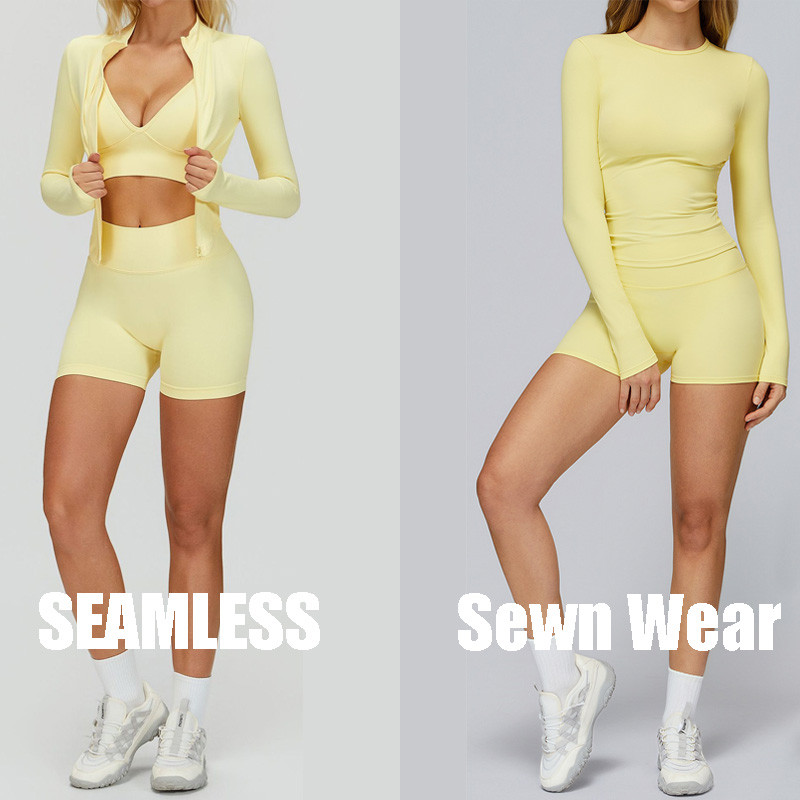
As a US athletic apparel brand, startup or private label seller, you may wonder whether to source seamless yoga wear or traditional cut-and-sew yoga leggings and tops for your next collection. This guide breaks down the key differences between these two popular construction styles, so you can pick the right option for your target audience, budget and design goals. If you are ready to move forward, send us an inquiry to get factory pricing and sample support from Aolafree, a reliable custom activewear manufacturer.
Quick takeaway: Seamless yoga garments can reduce side-seam friction and work well for smooth-fitting, solid-color core collections, while cut-and-sew yoga apparel offers greater design flexibility for cutouts, mesh panels, pockets, and fashion-forward athleisure. MOQ, production cost, decoration options, and durability considerations also vary by construction method and design requirements.
Core Construction Difference
Seamless yoga wear is produced using circular knitting technology, reducing or eliminating conventional side seams in many designs. This can create a smooth, close-to-body fit with fewer potential friction points. The final comfort level still depends on knit structure, garment fit, yarn selection, and the construction of connected areas.
Cut-and-sew yoga wear is cut from flat fabric rolls and stitched together. This method offers much higher design flexibility. Our Aolafree manufacturing team can add custom cutouts, mesh inserts, hidden pockets, layered panels and mixed fabric combinations that seamless knitting cannot easily produce.
Key Sourcing Factors: Knitting Start Line, Crotch Blowout Risk & MOQ
Many private label buyers overlook these factory-level details, but they directly affect your returns and production timeline. Below is a clear comparison table:
| Factor | Seamless Yoga Wear | Sewn Yoga Wear |
|---|---|---|
| Knitting Start Line / Construction Details | Has a knit starting line on the waistband or leg opening; this is an inherent feature of circular knitting | Stitch placement is fully customizable; you can hide seams in low-visibility zones |
| Blowout / Crotch Tear Risk | Risk depends on knit density, yarn and gusset design; our Aolafree factory reinforces high-stretch zones for bulk orders | Risk depends on gusset panel, stitch type and reinforcement; separate gusset construction is one common way to improve stability |
| Minimum Order Quantity | Typically 500–1,000 pieces, depending on the style, color, and knitting requirements | Typically 300–500 pieces per style and color, depending on the design and production requirements. Complex prints, multi-fabric mixes and special customizations may raise MOQ. |
| Cost Per Unit | Initial programming and machine setup may add development costs, depending on the design and production requirements | More flexible for small orders; unit cost can rise when you add complex cutwork and multi-panel designs |
Printing & Custom Graphics Capability
Printing options depend on the fabric composition, surface texture, stretch level, and garment construction.
For seamless knitwear, design options may include solid colors, tonal effects, jacquard patterns, and selected logo applications. The feasibility of detailed prints depends on the knitting method and compatible decoration process.
Cut-and-sew garments offer more flexibility for placing prints across individual fabric panels before assembly. Depending on the fabric, options may include sublimation, screen printing, heat transfer, and other suitable decoration methods.
Share your artwork, fabric preference, and reference garment with AOLAFREE so our team can evaluate suitable production and decoration options: share your print files here.
What Affects the Cost of Seamless vs. Sewn Yoga Wear?
The total cost depends on more than the construction method.
Seamless: Knitting setup, machine requirements, yarn selection, gauge, color planning, and production volume can all affect unit cost.
Cut-and-sew: Fabric consumption, pattern complexity, number of panels, sewing operations, printing, and finishing can influence the final price.
Both methods: Custom labels, packaging, sampling, quality requirements, and order quantities should be included when comparing supplier quotations.
When comparing prices, make sure both quotations use comparable fabric specifications, size ranges, decoration methods, packaging, and quality standards. This gives your brand a more realistic view of the total development and production cost.
Comfort & Durability Breakdown
Seamless: Seamless construction can reduce side-seam friction and create a smooth, close-to-body fit. Durability depends on knit density, yarn selection, garment structure, and reinforcement in high-stretch areas. The gusset, inner thigh, and waistband should be evaluated during wear and wash testing.
Cut-and-sew: Sewn construction allows targeted reinforcement, gusset customization, and greater control over panel placement. However, seam quality, stitch selection, and stress-point construction remain critical to long-term durability.
For both construction methods, fit testing, stretch recovery, pilling resistance, and repeated wash testing help determine whether a style is ready for bulk production.
Which One Should You Build For Your Brand?
Choose seamless yoga wear if:
You want to launch staple solid-color styles, prioritize next-to-skin comfort, and plan large repeat orders. Seamless styles can be a strong option for brands developing core, close-fitting activewear collections, especially when the target market values a smooth fit and coordinated colorways.
Choose cut-and-sew yoga & athleisure if:
Your selling point is fashion, unique cutouts, mesh, pockets, mixed fabrics or detailed prints. Cut-and-sew construction lets you create standout, social-ready athleisure pieces that separate your brand from generic competitors.
Some brands develop both seamless and cut-and-sew collections to serve different customer preferences, price points, and design goals. AOLAFREE supports both construction methods through OEM and ODM activewear development.